Understanding Your Detox Pathways — What Phases I, II & III Actually Mean For Your Body
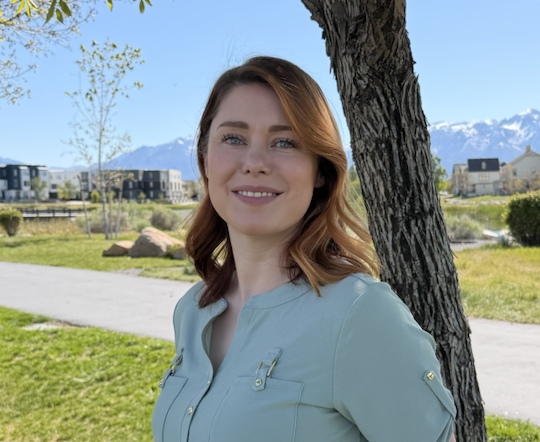
By Helen Parde, LMT · Whole Body & Sole
Your body detoxes in three phases — activate, neutralize, eliminate — and when any one of them is dragging, the whole system backs up. That’s what most people are actually feeling. |
If you have ever been told your bloodwork is normal and yet you still feel inflamed, foggy, hormonally off, sensitive to everything, or like your body cannot seem to keep up — there is a good chance no one has explained your detox pathways to you. Not really. Not in a way that connects to how you actually feel.
This is one of those topics that gets thrown around in wellness circles in a way that can feel either too vague (drink more water, sweat it out) or too intense (cleanse for ten days and rebuild your gut from scratch). Neither of those captures what is really going on inside the body when we talk about detoxification.
So let me walk you through it the way I walk clients through it in my office — in plain language, with respect for how smart your body actually is.
Because here is the truth: your body is not failing to detox. Your body is detoxing every single second of every day. The question is whether the pathways doing that work are supported, overwhelmed, or backed up.
What Detoxification Actually Is
Detoxification is your body’s internal processing system. It is how the body handles anything it needs to neutralize and move out — used-up hormones, environmental chemicals, byproducts of normal metabolism, medications, alcohol, mold metabolites, leftover inflammation, and the daily chemistry of being alive in a modern body.
Your liver is the most well-known organ involved, but it is not the whole story. Your gut, kidneys, lymphatic system, skin, lungs, and even your fascia all participate. Think of detoxification less as a single event and more as a continuous relay — something gets neutralized in one place, handed off to another, and finally eliminated.
That relay happens in three distinct phases. And when one of those phases is sluggish or overworked, the body lets us know — usually through symptoms that look nothing like what most people would describe as a “detox problem.”
Most of what gets labeled as hormone issues, sensitivity, brain fog, or unexplained inflammation is actually a detox phase that is not keeping up.
Phase I — The Activation Phase
The quick version: Phase I is the body’s “okay, we need to deal with this” moment. It grabs whatever needs to leave — hormones, alcohol, that medication, yesterday’s stress chemistry — and tags it for removal. The crucial part: the tagged version is more reactive than the original. Which is why this phase can make you feel worse before it makes you better if things are not clearing properly. |
Phase I is where your body takes whatever needs to be processed — a hormone, a toxin, a medication — and chemically tags it so the body can recognize it as something to move out.
This phase is run largely by a family of liver enzymes called cytochrome P450 (often shortened to CYP450). These enzymes are influenced by your genetics, your nutrient status, your stress load, and your exposure history.
Here is the part most people miss: Phase I actually makes things more reactive before they get cleared. The intermediate molecules created in this step are often more inflammatory than the original substance. That is by design — the body needs them in that activated form so Phase II can grab them next. But if Phase I is racing ahead and Phase II is dragging behind, those reactive intermediates start to pile up.
This pile-up is what shows up as feeling worse after a glass of wine, reacting strongly to medications, becoming sensitive to perfumes and chemicals, or feeling more inflamed than the situation should warrant.
What can slow Phase I down or push it into overdrive:
- Genetic variants in CYP450 enzymes (this is something a functional genomics test can show clearly)
- Chronic stress and elevated cortisol
- Low levels of B vitamins, magnesium, and antioxidants
- High exposure to environmental toxins, mold, alcohol, or certain medications
- A diet very low in cruciferous vegetables and protein
Phase II — The Neutralizing Phase
The quick version: Phase II is the cleanup crew. It takes everything Phase I just stirred up and wraps it in a safety jacket so it can leave without causing more chaos on the way out. There are six different cleanup crews, and each one handles different stuff. If one is slow, that specific category backs up. This is why you can be totally fine with coffee but wrecked by one glass of wine. Or fine with most things but hit sideways by your own hormones. |
Phase II is where the body takes those activated, reactive molecules from Phase I and attaches small helper molecules to them — a process called conjugation. This step is what actually makes things safe to send out of the body.
There are six main Phase II pathways, and each one handles different categories of substances:
- Methylation — for estrogen, histamine, dopamine, and many other neurotransmitters and hormones
- Glucuronidation — for hormones, medications, and many environmental toxins
- Sulfation — for hormones, neurotransmitters, and certain food compounds
- Glutathione conjugation — for heavy metals, oxidative stress, and many chemicals
- Acetylation — for caffeine, certain medications, histamine, and the compounds formed when meats are cooked at high temperatures (charred or well-done)
- Amino acid conjugation — for things like benzoates and salicylates
Each of these pathways has its own nutrient requirements. Each one is influenced by your genetics. And each one can become a bottleneck — meaning one specific pathway can be sluggish while the others are running fine.
This is why no two people have the same detox profile. One woman might have a slow methylation pathway and notice symptoms related to estrogen and histamine. Another might have a sluggish glucuronidation pathway and notice she does not tolerate hormonal birth control or struggles with progesterone clearance. Another might have low glutathione capacity and feel wiped out by mold, chemicals, or oxidative stress.
If you have ever been the person at dinner who orders one glass of wine and writes off the next two days — this is your pathway. You are not being dramatic. Your Phase II is just tired.
This is the layer of information functional genomics can give you. A nutrigenomics test can show you which of your Phase II pathways have variants that may need more support — and which ones are likely doing fine. That is not a diagnosis. It is a roadmap.
Genes do not decide your destiny. But they do explain why two women on the same protocol can have completely different responses.
Phase III — The Elimination Phase
The quick version: Phase III is the actual exit. Everything your body just worked so hard to process has to physically leave — through bile, the gut, lymph, and yes, the bathroom. You can run Phases I and II beautifully, but if nothing is leaving, the body just recycles it all. |
This is the phase almost no one talks about, and it is the one I see backed up most often in clients.
Once Phase I activates and Phase II neutralizes, the body has to physically move what it just processed out of the cells, through the bile, into the gut, and out via the stool. That is Phase III — the transport and elimination phase. It depends on:
- Healthy bile flow from the liver and gallbladder
- Functional gut motility (you are actually moving things out, daily)
- A balanced gut microbiome that does not reactivate what the liver just sent out
- Adequate hydration and lymphatic movement
- A nervous system that is regulated enough to allow digestion to happen at all
This is where so many of the loops I see in practice live. A client comes in with normal labs but is exhausted, hormonal, inflamed, sensitive. We start mapping the picture and realize her body is doing the first two phases of detox just fine — but constipation, sluggish bile, or chronic nervous system activation means nothing is actually leaving. The body is recycling its own waste.
I will say what your doctor probably did not: a bowel movement every two or three days is not normal. It is common. Those are different things.
When Phase III is backed up, Phases I and II keep working — but everything they processed comes back around. That is the moment a client realizes she has not had a daily bowel movement in years. Or that her brain fog gets worse when she is constipated. Or that her hormones swing more when her gut slows down.
Why The Three Phases Have To Talk To Each Other
This is the part I want every woman to understand: the three phases are not separate. They are a relay. If one phase is overworked and the next one is slow, the system backs up — and the body holds on to things it was actively trying to release.
A few common patterns I see:
Pattern 1 — Fast Phase I, Slow Phase II
This is the classic “sensitive to everything” pattern. Caffeine hits hard, alcohol wrecks the next day, medications feel intense, perfumes and chemicals are intolerable. Phase I is activating substances quickly and Phase II is not keeping up with the cleanup.
Pattern 2 — Slow Methylation, Backed-Up Estrogen
This is the pattern behind a lot of estrogen-dominant symptoms — heavy or painful periods, PMS that has gotten worse over time, breast tenderness, fibroids, and many of the perimenopausal flare-ups women describe. Estrogen is not being cleared through methylation efficiently, so it lingers.
Pattern 3 — Functional Phases I and II, Sluggish Phase III
Constipation, sluggish bile, low gut motility, chronic bloating. The body is processing — but not eliminating. Symptoms come back even after clean protocols because the waste is being reabsorbed instead of leaving.
Pattern 4 — Nervous System Override
And here is the layer most root-cause conversations skip: none of these phases run well when the nervous system is stuck in survival mode. Detoxification is a parasympathetic process. It happens when the body feels safe enough to digest, eliminate, and repair. If you are living in chronic sympathetic activation, every phase slows down — regardless of how clean your diet is.
What Actually Helps — The Whole-Body View
This is the part where most wellness articles tell you to drink lemon water and call it a day. We have tools to go much deeper.
Most online “detox” advice focuses on Phase I and Phase II — what to eat, what to supplement, which compounds support which pathway. That information is useful. But it misses the structural and nervous system pieces that make any of it work.
Here is the framework I use with clients:
1. Understand your individual genetic blueprint
Functional genomics testing maps which of your detox pathways have variants — and which ones may benefit from more targeted support. This is not about labeling yourself. It is about no longer guessing.
2. Support the nervous system first
Detoxification is a parasympathetic process. The body has to feel safe enough to do this work. Nervous system regulation is not optional — it is the foundation everything else rests on.
3. Move the body’s drainage systems
Lymphatic drainage, bowel motility, bile flow, and circulation all need to be moving for Phase III to do its job. This is where bodywork — myofascial release, lymphatic work, foot zone therapy — becomes part of the picture, not as a luxury, but as part of how the body actually moves things out.
4. Feed the pathways
B vitamins, magnesium, glutathione precursors, sulfur-rich foods, fiber, water, and protein — all of it matters. But it matters most when paired with the first three pieces. Otherwise it becomes another protocol the body is too overwhelmed to use.
5. Reduce the inputs you can
This is not about a perfect environment. It is about lightening the daily load — being thoughtful about what is in your products, your food, and your home, so the system has less to process to begin with.
If You Are Reading This And Something Is Clicking
If you have spent years being told your labs look fine while you know something is off — this conversation about detox pathways may be part of the answer. Not the whole answer, but a real piece of it.
Your body is intelligent. It is doing more for you, every second, than most people give it credit for. The work is not to override it. The work is to understand what it has been responding to — and give it the support it has been asking for.
That is the work I do at Whole Body & Sole. Nervous system regulation, functional genomics, bodywork, lymphatic and foot zone therapy — all of it pointed at the same question: what does this body need in order to do what it already knows how to do?
If this resonates, a discovery call is a good place to start. No pressure, no protocol you have to commit to — just a real conversation about what your body has been carrying.