
It was one of the first dyes scientists used to make cells visible under a microscope. It treated malaria before we had modern antimalarials. And now it's showing up in wellness conversations everywhere.
So what is methylene blue, and why is everyone suddenly talking about it?
I first wrote about methylene blue in my 660 Band post, because it has a fascinating relationship with red light. It deserves a post of its own. Here's what methylene blue actually does, what the human research says about its benefits, and the safety rules I want everyone to know before trying it.
What is methylene blue?
Methylene blue is a deep blue compound first made in the 1870s as a fabric dye. Researchers soon found it stained cells beautifully. Then in 1891, it became one of the first synthetic drugs ever used in medicine, as a treatment for malaria.
More than a century later, it's still in hospitals. An injectable form is FDA-approved to treat methemoglobinemia, a condition where red blood cells can't carry oxygen properly. That medical history matters, because it means methylene blue is well studied. It also means it's powerful, and it deserves respect.
Sources: the history and the FDA label
A 2011 review from the University of Heidelberg calls methylene blue "the first synthetic drug," with a 120-year history in medicine and as a lab stain. The current FDA prescribing label for the injectable form (ProvayBlue) covers its approved use and its safety warnings.
Schirmer et al., Neurobiol Aging, 2011 · FDA prescribing information, ProvayBlue
How it works: a backup cable for your mitochondria
Your mitochondria make energy by passing electrons down a chain of proteins, a bit like a bucket brigade. When that chain gets stressed or damaged, the hand-offs slow down and energy production drops.
Methylene blue is a redox molecule. It can pick up an electron, carry it, and drop it off further down the line. Researchers describe this as an alternative electron route: when part of the chain is struggling, methylene blue can help keep electrons moving and oxygen being used.
Think of it as a jumper cable for a tired battery, not a brand-new engine.
Here's the interesting part. This seems to work best at low doses. At higher doses, the effect can reverse. That's the same "just right" pattern we see with red light therapy, and it's a big reason more is never better here.
See the mitochondria research
A University of Texas review explains how low-dose methylene blue cycles between its oxidized (blue) and reduced (colorless) forms. That lets it donate electrons to the mitochondrial electron transport chain and increase cytochrome oxidase activity, the enzyme that uses oxygen to make energy. The review also notes its dose response: helpful at low doses, potentially harmful at high doses.
Methylene blue for memory and focus
Because the brain uses so much energy, researchers wanted to know if methylene blue's mitochondrial effects would show up in thinking and memory. A few small but well-designed human studies suggest they might.
26 healthy adults · one low dose · brain imaging
+7% correct memory answers
One hour after a single low dose, people in a double-blind, placebo-controlled trial recalled more correctly. Their brain scans showed more activity in attention and memory areas.
See the brain imaging study
Researchers at the University of Texas gave 26 healthy adults (ages 22 to 62) either low-dose methylene blue by mouth or a placebo. They scanned their brains with functional MRI during attention and short-term memory tasks, before and one hour after. Methylene blue raised activity in the insular cortex during the attention task and in prefrontal, parietal, and occipital areas during the memory task. Correct answers during memory retrieval rose 7%.
It strengthens what you just learned
This next study is one of my favorites, because it connects so closely to the nervous system work I do.
Researchers worked with adults who had a strong fear of enclosed spaces. Everyone did a short exposure session in a small chamber, then took either methylene blue or a placebo. A month later, the results split in a surprising way:
- People whose fear had come down during the session did even better a month later with methylene blue.
- People who ended the session still very afraid tended to do worse with methylene blue.
In other words, methylene blue seemed to help the brain hold on to whatever it had just practiced, good or bad. That's a powerful reminder: it isn't the healing. At most, it may help strengthen the new pattern you're building.
This is exactly why I care so much about calm, regulated sessions in Cognomovement. When we rewire a pattern, we want the brain to remember the safe version.
See the fear extinction study
Randomized, double-blind trial with 42 adults with marked claustrophobia. Right after six 5-minute exposure trials, they received 260 mg of methylene blue or a placebo. Those with low fear at the end of training had significantly less fear at one month with methylene blue. Those with moderate to high fear at the end tended to fare worse. Methylene blue also improved contextual memory, no matter how much fear people had.
Methylene blue and red light
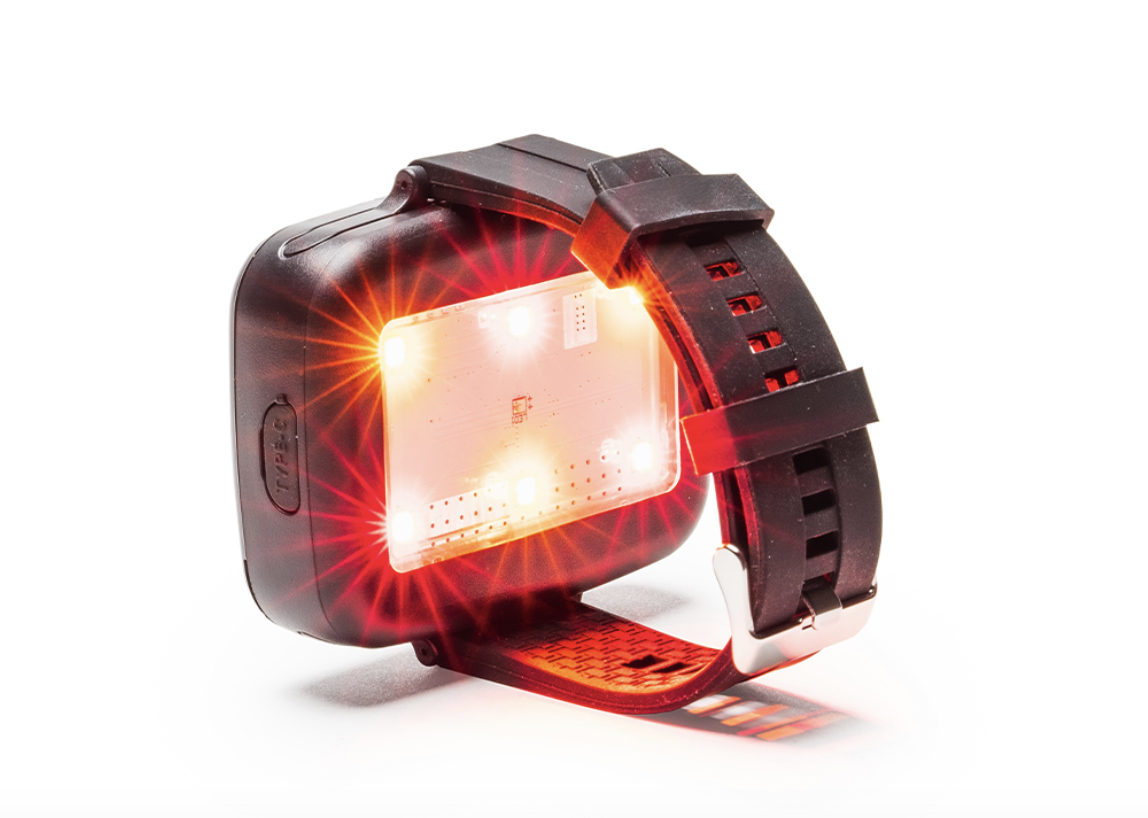
Methylene blue looks blue because it absorbs orange and red light. When it absorbs light, it gets energized and can pass that energy along. That's why people are curious about pairing it with red light, especially the amber-red 605 nm range.
I walk through this in detail, including how the wavelengths line up, in The 660 Band: Red Light Therapy for Circulation. The short version: the chemistry is real and the idea is promising, but I haven't found a human study yet of oral methylene blue combined with a wearable red light device.
New to red light? Start with Red Light Therapy: More Than Just an ATP Boost for the science, then explore the red light options at Whole Body and Sole.
The same post also covers the virus question. European blood banks have used methylene blue plus light to inactivate viruses in donated plasma for decades. That process happens in a bag outside the body, so it doesn't prove the same thing happens inside you.
But methylene blue clearly does act on the blood inside the body. Doctors use it to help red blood cells that have lost their ability to carry oxygen start carrying it again. That's its FDA-approved job, and it works in the bloodstream within minutes to hours. Put that together with its lab track record against viruses and its love of light, and you can see why researchers are so curious about methylene blue, light, and blood. It's a relationship worth watching.
What about circulation, aging, and the big claims?
You'll see methylene blue labels promising better circulation, oxygen flow, cognitive health, and even a longer cell lifespan. Here's my honest take:
- Mitochondria and oxygen use: strong lab science, and a believable mechanism.
- Memory and attention: a few small but well-designed human studies. Encouraging, not settled.
- Aging, brain disease, and "longer cell lifespan": mostly lab and animal research so far. Interesting, but not proven in people.
I'd rather you have realistic expectations than be disappointed by marketing.
The methylene blue supplement I recommend
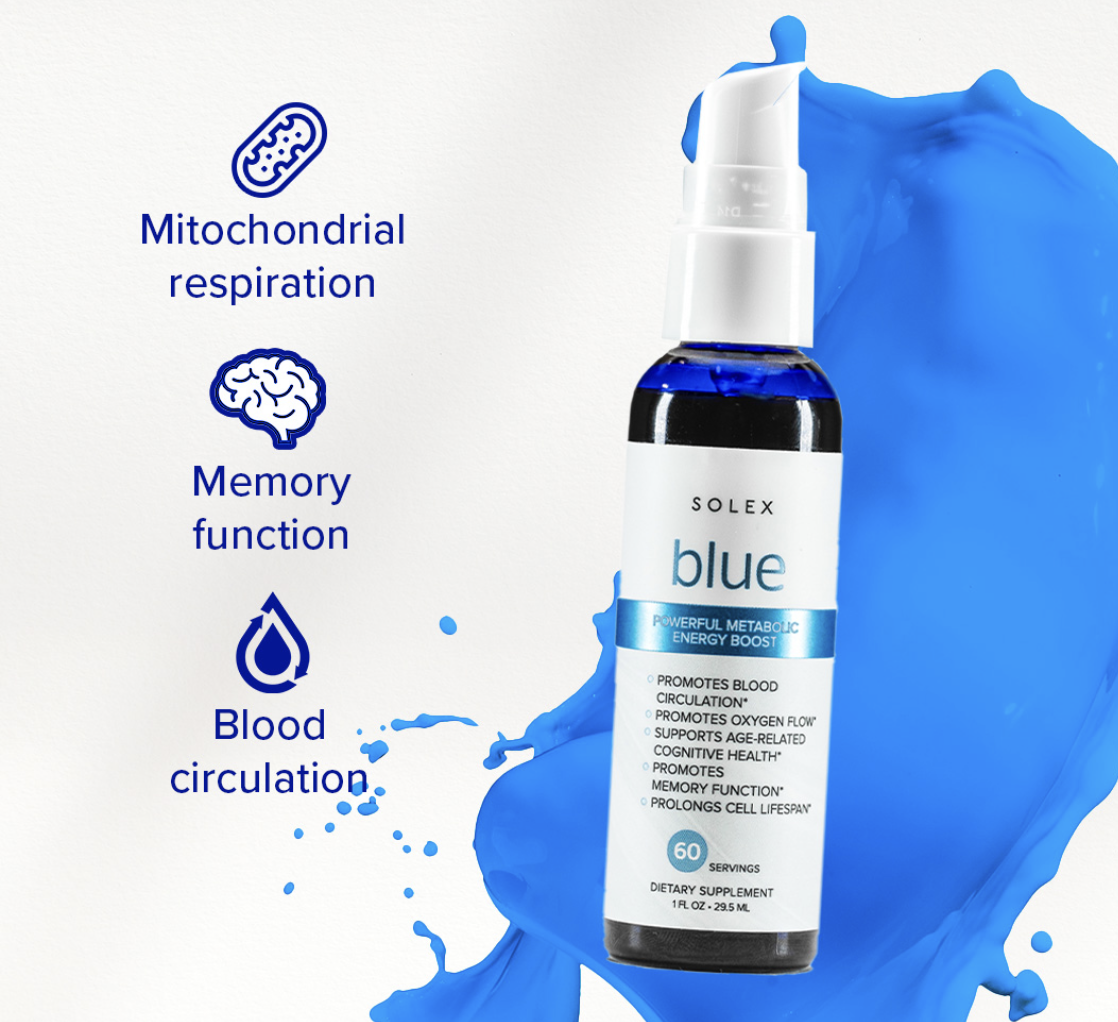
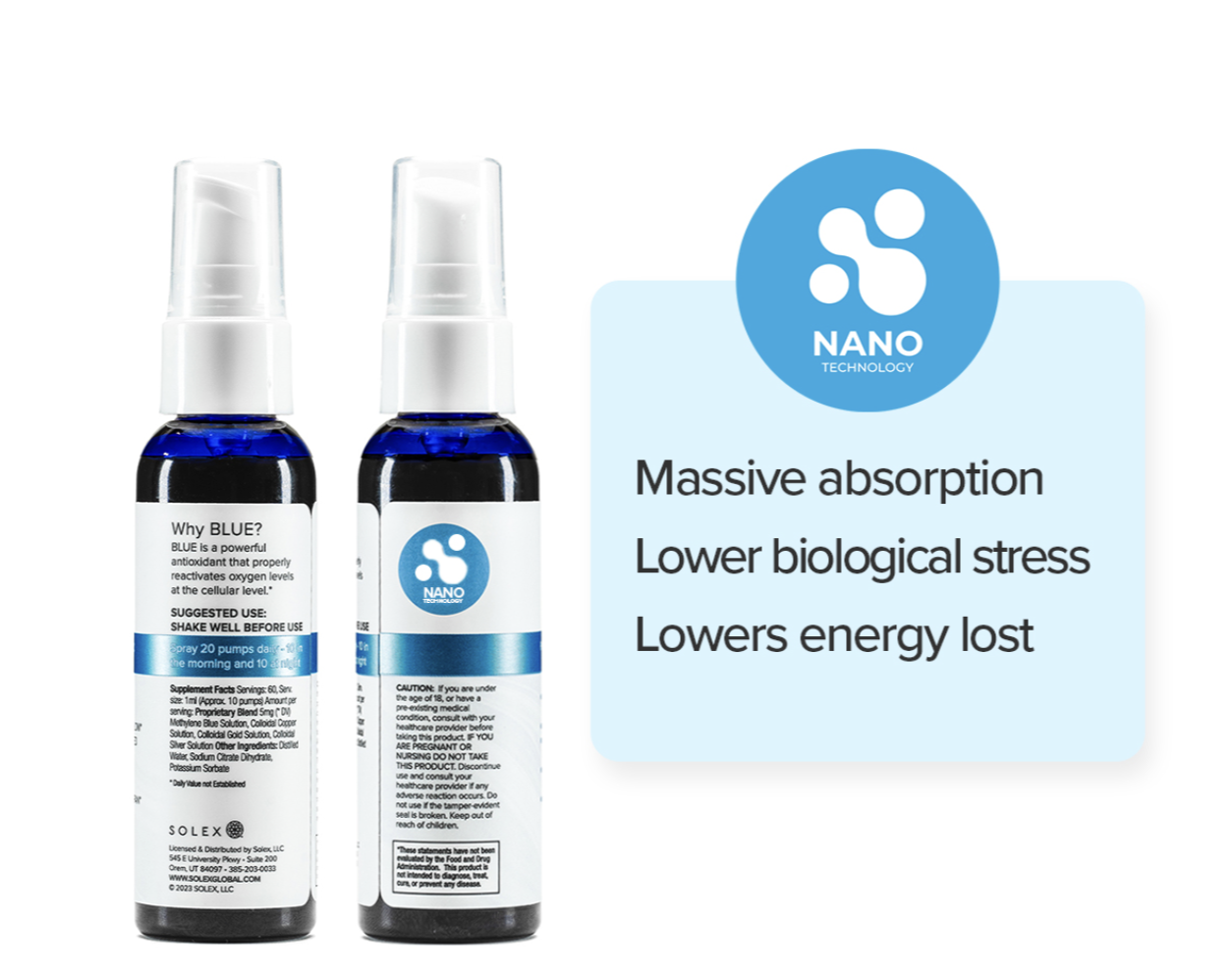
If you and your provider decide methylene blue is a fit, the one I recommend is Solex Blue. It's a liquid dietary supplement: 1 fl oz, about 60 servings. Solex says its "nano" formula is designed for better absorption.
A few practical notes:
- Start low. With methylene blue, the research consistently points to low doses. Follow the label, and don't double up.
- Expect blue. Methylene blue can turn your urine blue or green. It's harmless and expected, but it surprises people.
- Mind your teeth and tongue. Liquid forms can temporarily tint your mouth blue.
Safety first: who should not take methylene blue
This is the most important section of this post, so please don't skip it.
Talk to your provider first, and avoid methylene blue if any of these apply:
- You take an antidepressant or other serotonin-affecting medication. That includes SSRIs, SNRIs, tricyclics, MAOIs, and some other psychiatric drugs. Methylene blue blocks an enzyme (MAO) that breaks down serotonin. Combined with these drugs, it can cause serotonin syndrome, which can be serious and, in rare cases, fatal. The FDA issued a safety warning about this in 2011.
- You have G6PD deficiency (or don't know your status and have a family history). Methylene blue can trigger the breakdown of red blood cells in people with this genetic condition.
- You're pregnant or breastfeeding. The FDA label warns of possible harm to a developing baby.
- You're also using light therapy. Methylene blue reacts to light, so ease in and pay attention to how your skin and eyes feel.
- You have kidney or liver concerns, or you take several prescription medications. Ask before you add anything new.
Safety sources
The FDA prescribing label for injectable methylene blue includes a boxed warning for serotonin syndrome with serotonergic drugs and advises avoiding those drugs within 72 hours. It also covers hemolysis risk in G6PD deficiency and use in pregnancy. The Anesthesia Patient Safety Foundation explains methylene blue's MAO-inhibiting effect and the 2011 FDA safety communication.
FDA prescribing information, ProvayBlue · APSF: Methylene Blue and the Risk of Serotonin Toxicity
Curious about your own genes? Functional Genomics Testing can show how your body handles energy production, oxidative stress, and detox, which helps us decide whether tools like methylene blue make sense for you.
Where this leaves us
Methylene blue isn't a miracle, and it isn't candy. It's a century-old molecule with a fascinating way of supporting your mitochondria, a few encouraging human studies on memory and focus, and a real relationship with light.
Used thoughtfully, at low doses, with the right safety checks, it can be one more tool for supporting your energy. Used carelessly, especially alongside the wrong medications, it can cause real harm. That's why I always want you to start with your whole picture.
Written by Helen Parde, Integrative Health Facilitator at Whole Body and Sole, Herriman & South Jordan, Utah.