
What if one small habit could support your energy, your recovery, and your heart, and all you had to do was put on a watch?
Circulation is the delivery system for everything. Your blood carries oxygen and nutrients to every organ and carries waste away. When flow is sluggish, everything downstream feels it: cold hands, slow recovery, low energy, foggy thinking.
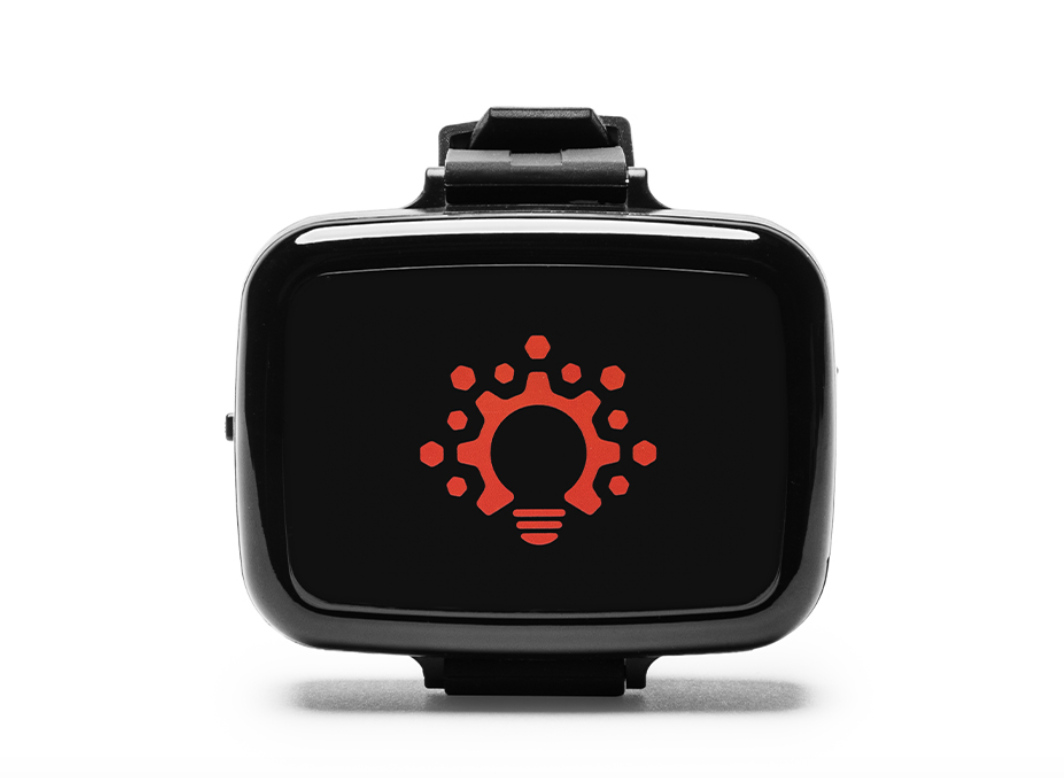
The 660 Band by Solex was designed with one main target in mind: the bloodstream. It uses two shades of red light, 660 nm and 605 nm, aimed at the inside of your wrist. I wear mine every day. Here's why, and what the science actually says about red light therapy for circulation.
Why the wrist?
Put two fingers on the inside of your wrist and you'll feel your pulse. That's the radial artery, running just under the skin. The ulnar artery runs along the other side, and veins return the blood back up the arm. Few places on the body bring this much blood this close to the surface.
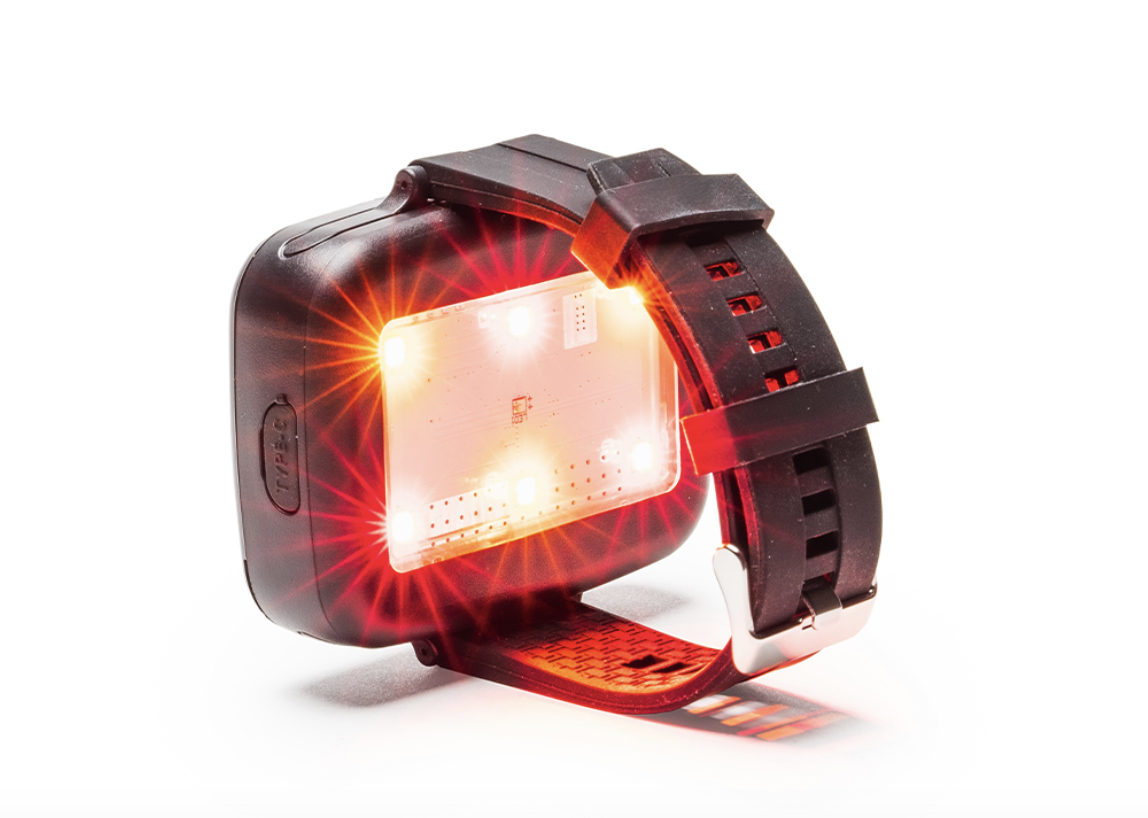
The band's six red LEDs face the inner wrist, right over those vessels. The idea is simple: instead of lighting up one sore spot, you shine light on the blood as it flows past.
This isn't a Solex invention. Researchers call it vascular photobiomodulation, or "transcutaneous ILIB." The original version, intravascular laser irradiation of blood (ILIB), threaded a fiber-optic light into a vein. Over time, clinics moved to a non-invasive version: shining red light over the radial artery at the wrist.
Wrist light therapy · review of 8 randomized trials
30–55% less pain
Across 340 participants, ILIB (including wrist-applied versions) was linked to lower pain, lower inflammatory markers, and better quality-of-life scores. No serious side effects were reported.
What the reviews say, including the caveats
2025 review of randomized trials: 8 trials, 340 people, covering heart disease, diabetic neuropathy, osteoarthritis, spinal cord injury, and more. Results showed consistent drops in pain (30–55%), inflammatory cytokines (IL-6, TNF-α), and oxidative stress markers. No serious adverse events. The authors asked for more standardized dosing.
2025 integrative review: 37 studies of ILIB and wrist-applied light. The results were promising, but the authors said differences in methods prevent a firm claim that it works. More rigorous studies are needed.
2023 lung review: 10 clinical studies of ILIB or wrist light in bronchitis, asthma, pneumonia, and tuberculosis reported less inflammation, better gas exchange, and shorter hospital stays. The reviewers noted a lack of randomized controlled trials.
Díaz et al., Photodiagnosis Photodyn Ther, 2025 · Brassolatti et al., Lasers Med Sci, 2025 · Schapochnik et al., Lasers Med Sci, 2023
660 nm at the radial artery: a blood chemistry study
28 women received 30 minutes of 660 nm light over the radial artery. Researchers analyzed their plasma before and after. Fifteen molecules changed, including some tied to fat metabolism and hormone clearance. The researchers called the overall effect "minimal" but real, and worth studying further.
I love this one because it uses the same wavelength and the same spot as the 660 Band, and it shows light at the wrist does reach the blood.
Two shades of red, two different jobs
Not all red light is the same. Back in 2005, researcher Tiina Karu mapped which wavelengths cells respond to most. She found distinct "active" bands in the red and near-infrared range. Both of the 660 Band's wavelengths sit near those peaks.
Sits in the red "active" band cells respond to (Karu measured one peak right at 606 nm). This is also the color range methylene blue absorbs.
Sits near the far-red active band (667–684 nm). Studied for blood vessel relaxation, collagen, and recovery.
The action spectrum study
Karu and Kolyakov analyzed how human cells' DNA and RNA activity and adhesion responded to light from 580 to 860 nm. They found four active regions: a red peak at 613.5–623.5 nm (one spectrum peaked at 606 nm), a far-red peak at 667.5–683.7 nm, and two near-infrared peaks. This paper is one of the main reasons red light devices use the wavelengths they do.
660 nm: opening up the vessels
The best-studied way red light may support circulation is through nitric oxide, the molecule your blood vessel lining uses to tell vessels to relax and widen (vasodilation).
A cardiovascular research team at the Medical College of Wisconsin has studied this for years using 670 nm red light, a close neighbor of 660. In mice, red light released a stored form of nitric oxide from the vessel walls. Blood flow went up and stayed up for 30 minutes after the light was off.
670 nm red light · 14 days · mouse model of poor leg circulation
Steady gains in blood flow
Daily light treatment produced a significant, lasting increase in blood flow to a leg with a narrowed artery. The researchers suggested it "may offer a simple home-based therapy in the future."
That's an animal study, so it isn't proof for people. But it shows a believable mechanism, and it's the same direction human microcirculation studies are pointing. I cover a human blood-flow trial in Red Light Therapy: More Than Just an ATP Boost.
See the vasodilation study
Mice received 670 nm light (50 mW/cm²) over the hind limb. Five to ten minutes gave the best vasodilation. Light lowered the stored nitric oxide precursor in the treated muscle, and blood flow stayed raised 30 minutes after treatment. In mice with a narrowed thigh artery, 14 days of repeated treatment steadily improved perfusion.
660 nm and your skin
660 nm is also one of the best-studied wavelengths for skin. In a 2009 study, 660 nm LED light raised a key collagen-building protein by 31% and lowered a collagen-breaking enzyme by 18% in lab-grown human skin. In a split-face trial, 87% of people saw improved wrinkle scores after 12 treatments.
One honest note: those studies shined light on the face. The 660 Band shines on your wrist, so think of it as a circulation tool, not a facial. For skin, the AO Mask is the better fit.
See the collagen study
Researchers used a pulsed 660 nm LED on reconstructed human skin (11 treatments), then in aging adults in a single-blinded, split-face study (12 treatments). Type-1 procollagen rose 31% and MMP-1 fell 18%. Over 90% of people had less wrinkle depth and roughness. No side effects or downtime.
605 nm and the methylene blue connection
Here's where it gets interesting. Methylene blue is a century-old blue dye that is also a medication. It looks blue because it absorbs orange-red light, the same color range as the band's 605 nm LEDs.
Methylene blue is also a redox molecule. It can pick up an electron and hand it off again. Researchers have studied how it shuttles electrons within the mitochondria, almost like a backup battery cable for cellular energy. When it absorbs light, it gets "re-energized" and can pass that energy on.
That's the thinking behind pairing 605 nm light with methylene blue: the light may help keep it active. It's a fascinating idea, and the chemistry is real. To be clear, I haven't found a human study of a 605 nm wrist device combined with methylene blue taken by mouth. This is a "promising idea" topic, not a "proven" one.
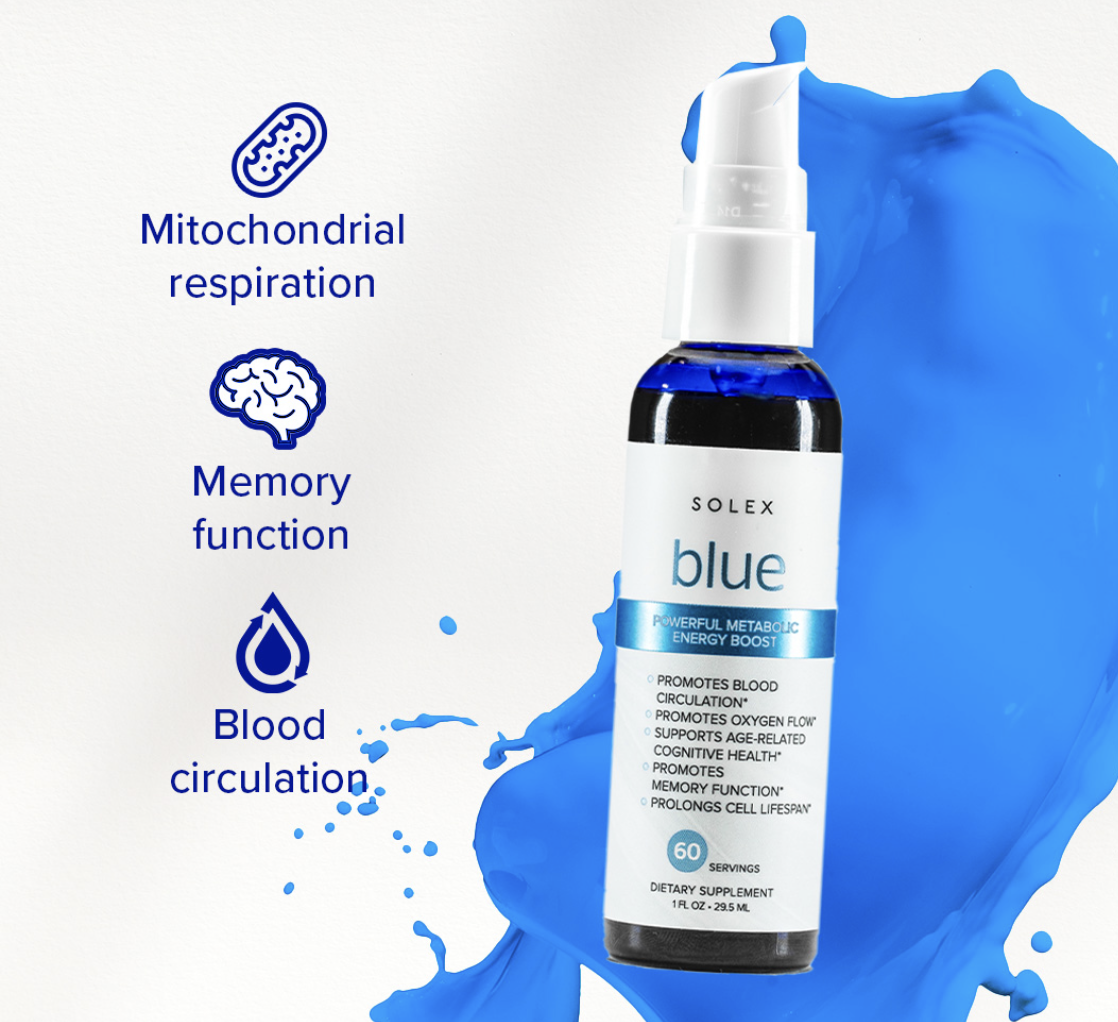
If you're curious to explore it, the methylene blue supplement I recommend is Solex Blue. I'll go deeper on methylene blue in an upcoming post.
How methylene blue works in the mitochondria
A 2012 review from the University of Texas described how low-dose methylene blue cycles between oxidized and reduced forms. This lets it donate electrons to the mitochondrial electron transport chain, supporting oxygen use and energy production, especially when the chain is under stress.
The virus question: what the studies actually show
You may have heard that 605 nm light "attacks viruses in the blood." I want to show you where that idea comes from, because the research behind it is solid. It's just from a different setting than your wrist.
For about 30 years, European blood banks have used methylene blue plus visible light to clean viruses out of donated plasma.
Here's how it works: methylene blue is added to a bag of donated plasma, and the bag is exposed to visible light. The light-activated dye damages viruses so they can no longer infect anyone. Then the dye is filtered out before the plasma is used.
Methylene blue + light · donated plasma
99.999% of SARS-CoV-2 inactivated
That's a 5-log reduction (down to the limit of detection), reached at just one third of the standard light dose. Hepatitis E and most enveloped viruses respond to the same process.
See the plasma studies
- 2011 review: Methylene blue–treated plasma had been in clinical use for 18 years, with about a 6-log reduction for most enveloped viruses and no serious side effects in haemovigilance data.
- 2023, SARS-CoV-2: Treatment with methylene blue (about 0.8 µmol/L) and visible light reduced infectivity by at least 5 logs at 40 J/cm², one third of the standard 120 J/cm² dose.
- 2022, Hepatitis E: Effectively inactivated by methylene blue plus light.
Seghatchian et al., Transfus Med Hemother, 2011 · Hobson-Peters et al., Transfusion, 2023 · Gravemann et al., Transfusion, 2022
What that research does not show: that wearing a 605 nm band kills viruses inside your body. The blood-bank process happens in a thin bag outside the body, with the dye added at a set concentration and a carefully measured light dose. That's very different from light passing through skin at your wrist. And on its own, without a dye, red light isn't what inactivates viruses. A 2022 review found viruses are mainly sensitive to violet and blue light.
So here's where I land. The red-light-plus-methylene-blue idea comes from real, well-established science. The 660 Band is not a treatment for infection. What the wrist research does support is calmer inflammation, better circulation, and well-tolerated sessions, and those give your body's own defenses a good environment to work in.
Light-only virus review: Hessling, Lau & Vatter, Photonics, 2022
Why I wear mine every day
Honestly? Because it's easy. I love my panels and wraps, but they ask me to stop and sit. The 660 Band doesn't. I put it on and keep living my life. I wear it while I fold laundry, while I answer emails, even while I sleep.
Consistency beats intensity with red light. A small dose you actually use every day is worth more than a big device collecting dust in the closet. I can feel the difference in my own health, and that's why it's become a daily habit for me.
660 Band at a glance
- Lights6 red LEDs: 3 × 660 nm, 3 × 605 nm
- BatteryAbout four 45-minute sessions per charge
- ChargingUSB-C, with an on/off switch
- FitFlexible watch-style band with clasp
- Light casing7 × 5 × 2 cm
- Band19.5 cm long × 2 cm wide
- FeelNo heat, painless, non-invasive
See it in action
What is the 660 Band? A short walkthrough from Solex.
A few tips for using it well
- Skin contact matters. Wear the lights flat against the inner wrist, not over a sleeve.
- More is not better. Red light follows a "just right" dose curve. Too much can blunt the response. I explain this in my red light science post.
- Build the whole picture. Circulation loves movement, hydration, and minerals. Light is one helpful signal, not the whole plan.
- Pair it with targeted devices. The band works on your circulation overall. For a specific area, the AO Back, AO Glove, or AO Mask work locally, and the AO Foot is made for tired feet.
- Check with your provider first if you're pregnant, take light-sensitizing medications, or have a medical condition affecting your skin or blood vessels.
Where this leaves us
The 660 Band isn't magic, and it isn't a cure. It's a simple, wearable way to give your circulation a gentle red-light signal every day, at the spot where blood comes closest to the surface. The research on wrist light therapy is young but encouraging. The individual wavelengths are well studied. And the habit is easy enough that you'll actually stick with it.
If you want to try it, you can get the 660 Band here. You can also see all the red light options at Whole Body and Sole, including red light as an add-on to your massage.
Written by Helen Parde, Integrative Health Facilitator at Whole Body and Sole, Herriman & South Jordan, Utah.